
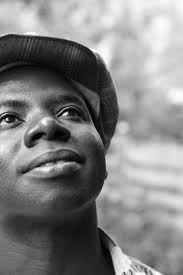
 Nathalie Carré: Bound to Secrecy (Borderland in its french translation) is your third book and the first be published in French. You have two previous books: The Land of the Fathers and The Kingdom of Sebah. Could you just briefly introduce yourself to our readers who may discover you?
Vamba Sherif: I was born in northern Liberia, from a family which included members from different parts of West Africa - from Liberia, Sierra Leone, Guinea and Mali. As a result, I grew up speaking languages such as Gbandi, Kissi, some Lomah, and Mende, which is spoken in Sierra Leone. My mother tongue was Mande or Mandingo, variations of which are spoken in Mali, Guinea, Sierra Leone, Ivory Coast, Burkina Faso and Senegal. I grew up surrounded by books and in a tradition of scholarship that went back centuries. I learned Arabic and English at an early age. Moving to Kuwait with my father, who taught at the university, sharpened my awareness of the diversity in the world. I lived in a neighborhood with dozens of nationalities, and attended secondary school with students from The Maldives, India, Malawi, America, Palestine, Jordan, Ghana… It was in Kuwait that I discovered world literature: I read dozens of novels from The Heineman African Writers Series, and fed voraciously on the stories of Chekov, while marveling at the world of Stendhal. I could not believe that a writer could evoke an ancient world as persuasively as Flaubert did in Salambo. I wrote long letters home in Arabic about life in a desert city-state, describing my fascination with life as a migrant in a wealthy country, touching on Arab hospitality and poetry. The first Gulf War forced me out of Kuwait and into The Netherlands where I read law and developed my talent as a writer. More than anywhere else, it was in Europe that I became keenly aware of myself as an outsider, as an exile from a country at war. My search for answers regarding my identity, regarding the civil war in my country, led me to writing my first novel, The land of the fathers, a novel about the founding of Liberia by the freed blacks from America in the nineteenth century.
NC: I found your first chapter very impressive and quite cinematographic in its own way. In fact, the whole novel is loaded with an incredible atmosphere. What were your influences while writing (some books, movies, polar, landscapes, Liberia…)?
VS: The book that had the most influence on me while writing Bound to Secrecy was Yambo Ouologuem's Bound to Violence. In fact I called the novel Bound to Secrecy to pay homage to his talent. Bound to Secrecy is the title of the English version of the novel; Borderland the French title. I met the great writer in the Malian city of Mopti in 2003. Ouologuem was by then a shadow of himself, a man broken by the battles he fought against himself and the world. The setting is familiar to me; it could be my town of birth or any other town in Liberia. In my early years, I read thrillers and detectives, but this novel was not influenced by a particular book, movie or author. The landscape is definitely Liberian, the mountains Liberian. In fact the atmosphere is an attempt to recall, through senses, the atmosphere of my childhood, the fears and fascinations of a known and unknown world.
NC: By the way, I've read that though you've been living in quite a number of different parts of the world, you still consider yourself as a Liberian writer. Can you develop this point a little bit and tell us about the persistence of your native country?
VS: In an interview with Liberia Sea Breeze, a literary journal to which I was attached as an editor, I said that I considered myself a Liberian writer, for I was addressing a Liberian audience, which had never heard of me before. This was a means of connecting to the Liberian people. But how can a writer, like me, define himself? This is a question that has plagued me for years, for I was born in Liberia, but was brought up in Kuwait. I lived amongst the Arabs for a while, and now I've lived longer in Europe than in Kuwait and Liberia put together. Liberia is my birthplace, its forests and landscapes are engraved in my memory, its tradition parts of my tradition. But the world is my home, and literature the best medium through which I can define or give shape to that constantly-shifting world. So then, I am a Liberian, a Kuwaiti, a Dutch at the same time - a cosmopolitan in the truest sense of the word.
NC: Reading the book, I was also very sensitive to what I could call a "writing of all senses": "Be not afear, the isle is full of noises" could also be said of Wologizi (though some are really scaring). The village is seething with rumors, songs, secrets and lies, awful cries. Vision is also important, though deceptive for some times. Are senses a better way than reason to apprehend the world, even if they can be subject to hallucinations?
VS: Bound to Secrecy was an attempt to respond to the senses, to recapture the fears and fascinations of my childhood. Through senses and senses alone, I felt I could give voice to the fears that I caught in the faces of a group of people who were victims of power and the abuse of power. It happened in 2000 when, after the publication of my first novel, I visited Liberia. There I had an experience that would alter my outlook on power. The journalists who accompanied me decided to see the then president of Liberia Charles Taylor. The meeting coincided with the day Taylor assembled people from the north, from my birthplace, in the executive mansion. He compelled those people to declare their support for him in his war against the north. In other words, to support him in his efforts to slaughter their sons and daughters who had taken up arms against him. Amongst those people, I recognized an uncle, an aunt, a paramount chief, and many notables who were too stricken by fear to recognize me. I saw many of them stand up, and in elaborate speeches praise Taylor to the skies, declaring their support for him. Fear was almost palpable in the room; I could feel it rising and engulfing everyone, especially when Taylor appeared and shouted an ancient war cry. That encounter not only affected me it also triggered the conception and birth of my novel Bound to Secrecy.
NC: Next to sensations, words: Wologizi seems woven by them: the ones of Tetese the storyteller, but also by the many rumors, stories and memories. Is there a particular power of words and are human lives bound to be transformed into stories?
VS: I was born into stories. There were the stories my grandmother told me, and the stories of the women of our house, including the stories of my ancestors. Every time I visit Liberia, I live and breathe stories, dozens of them, as if the people, like me, feed on stories. The stories of the victims and perpetrators of the civil war are there if one is interested in them, and I am. By telling stories, people can transform their lives and the world around them. This is the power of storytelling.
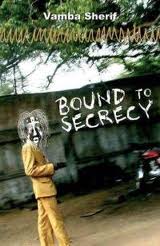 NC: For me, one of the great question of this book focuses on the "stranger". Some people arrive from the outside world (Mawolo, but also the Lebanese merchand and, before them, Tetese's father). If Wologizi keeps its distance, these people bring some changes to (and are deeply transformed by) the society. How do you consider the link between "inside" and "outside"?
VS: I've always been fascinated by the other, by the stranger, for all my life, I've been arriving. In Europe I am regarded as a stranger, even though most often I don't feel so. In Liberia, where my English sounds American or different, I am considered a stranger, an outsider. My attempt to adapt to the new has been my struggle all my life. Strangers have often affected the destiny of the new world. Looking at it from outside, these strangers are capable of discerning the new world with fresh eyes, therefore seeing its strengths and weaknesses. This is their advantage. What the new world makes of them is another matter altogether.
NC: The title of your book has been translated in French (in a very good way to my mind) as "Borderland". Shown/hidden; visible/invisible; truth/secrets and lies: are these frontiers or boundaries so easily to defined?
VS: The title Borderland was my idea. It was the first title of the novel. Indeed, the novel explores the visible and invisible, the lies and the truth, the hidden and the revealed. The boundaries are not constant, they shift and pour into each other, sometimes creating confusion, because in this world there are no borders to be manned. Moreover, no one knows where the border begins and where it ends, no one can tell whether a wrong has been done, not even those thriving within the border. That makes the world of the novel a complex and sometimes complicated world. The novel is therefore a reflection of our complex world.
NC: A great French writer, Marie Ndiaye, has written about Trois Femmes Puissantes. Two female characters are really powerful too in your novel: Makemeh and Hawah Lombeh. Can you tell us a bit about the way they came to life under your pen?
VS: The two female characters in the novel Makemeh and Hawa Lombeh are examples of women in the community in which I grew up. I was brought up amidst powerful women who chatted the course of their lives, women who included my mother and her sisters, all of whom were well to do and independent of their husbands. There's a story of how my father who built a school after his return from Egypt. He had tried and succeeded at collecting people around him who believed in his mission. What he did not know was that some of them did not trust him. Later, they accused him in a gathering, before the vice-president of Liberia, of embezzlement. One woman, who sat at the periphery of the crowd of men, stood up and forced her way through the crowd to the vice-president.'These men are all liars, Mr. Vice-president. They lack this man's courage and so are jealous of his success.' Such manner of women I knew.
NC: Wologizi appears deeply bound to its surroundings: the mountain and, most of all, the forest. Do you think that the environment is an important part of our lives?
VS: I could not have written the novel without the keen awareness of the majesty, the mystery and beauty of the forests in which I grew up. Wologizi is a reflection of my town of birth, although in reality it refers to the highest mountain in Liberia. Being a Liberian who has lived most of his life outside of the country, I've come to appreciate these forests. As a result I am keenly aware of the importance of the environment, for without it the mystery and the majesty would be gone.
NC: And finally, which books do you consider necessary to re-read from time to time?
VS: The books that I keep returning to all the time are the stories of Wilton Sankawulo, a Liberian writer and folklorist, the stories of Chekov and Ivan Bunin, the great novels of André Schwarz-Bart, especially his A girl Named Solitude and The Last of the Just, the novels of Ngugi Wa Thiong'o, Ouologuem's Bound to Violence, Thomas Mann's Death in Venice, Marquez's Chronicle of a Dead Foretold, Stendhal's Scarlet and Black and Flaubert's Salambo.
This conversation has been published in partnership with Africultures and originally appeared here in English and French.
Nathalie Carré earned her degree in Modern Languages with a focus on Kiswahili. Her thesis explores early travel narratives written in African languages during the late nineteenth century (publication pending). As a specialist in African literatures, she writes for various magazines and hosts literary events and roundtables.